BOUCHOTS (2026)
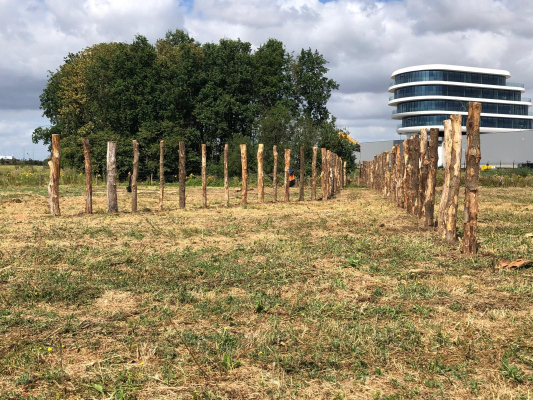
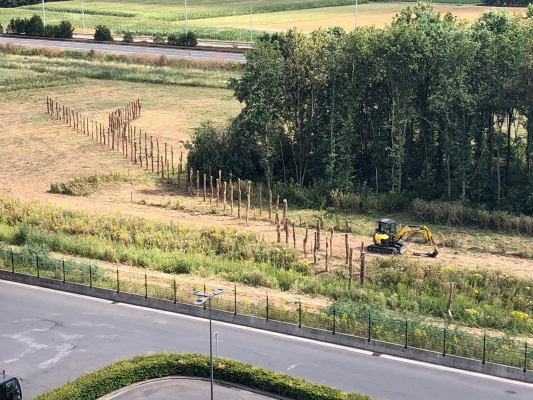
MLSO commissioned a proposal for a land art installation at a site along the E34 in Verrebroek, utilising the approximately one hundred oak trunks from a partially felled forest. The starting point is a work that is both monumental and ephemeral, and which also enhances biodiversity.
The Verrebroek polder has been shaped by the sea for centuries. Until the 15th century, this landscape consisted of salt marshes that were flooded by brackish water at high tide. Fossilised shark teeth, whale bones and shells bear witness to an even more distant past, to a period when this area lay entirely beneath the sea. This project brings that hidden history back into view.
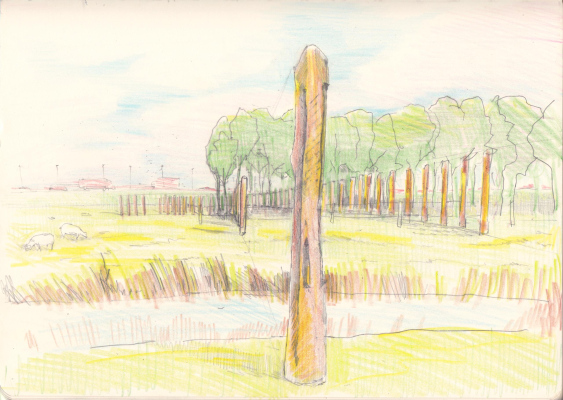
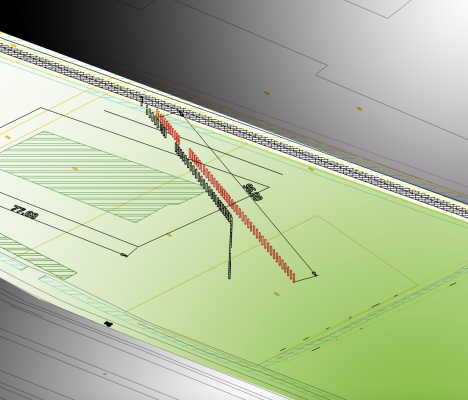
The tree trunks were placed upright in two long rows, as a reference to the mussel posts along the North Sea coast – the so-called ‘bouchots’ – but also to prehistoric wooden monuments such as Woodhenge, where upright trunks marked the landscape. The arrangement forms a monumental gateway that draws the eye and adds an extra layer to the landscape.
Whereas the posts in the sea serve as supports for mussels, here on land they become supports for new life. Gradually, they will form a habitat for fungi, insects, mosses, lichens and birds. In this way, the installation connects the site’s maritime past with archetypal human interventions in the landscape and the ecological richness that will develop anew today.
As with many prehistoric monuments, the orientation of Bouchots is no coincidence. The two rows of trunks are aligned with the sunrise and sunset during the summer and winter solstices. In this way, the work connects the cycles of humankind and nature with the long history of this site, whilst contrasting with the temporariness and transience of the work itself.
CREDITS
Concept: Joris De Rycke
Realisation: Bram Rombouts & Joris De Rycke
Execution in collaboration with Rúben Priem Paiva
Drawings and photographs: Joris De Rycke